



The Ultimate Guide to Choosing the Right Wheel Loader Attachments for Maximizing Job-Site ROI
Introduction
In modern heavy civil construction, aggregate production, and industrial material handling, capital asset utilization is the defining boundary between profitability and squeezed margins. Relying on a standard general-purpose bucket for every application severely restricts machine productivity, increases unnecessary wear, and inflates hourly operating costs. When a machine is forced into work cycles for which its front-end tool is poorly matched, pass counts multiply, truck idle times increase, and fuel burn per ton surges. As heavy equipment management authority and civil engineering scholar Dr. Frank Harris emphasized in his research on construction plant economics, "The primary vehicle chassis represents a capital investment in mobile hydraulic power; its true economic return is dictated entirely by the efficiency of the work tool engaged with the material."
To maximize asset productivity, fleet owners are increasingly leveraging a multipurpose operational model. Strategically equipping a primary Wheel Loader with specialized, purpose-built Wheel Loader Attachments transforms a single heavy machine into a multi-application power unit capable of executing diverse tasks across construction yards, quarry faces, timber operations, and waste-recycling facilities. Transitioning from a single-bucket configuration to an adaptable attachment ecosystem creates a multiplier effect on return on investment (ROI)—eliminating the need to deploy dedicated secondary machinery, improving operator efficiency, and extending machine lifecycle value. By mastering hydromechanics, payload dynamics, and total cost of ownership (TCO) metrics, you can optimize job-site cycle times, minimize operational overhead, and unlock maximum job-site ROI from your Wheel Loader fleet.
Comprehensive Attachment Classification: Matching Tools to Material Demands
Selecting the correct front-end tool requires matching the physical properties of the material being moved to the design geometry of the attachment. Deploying generic or mismatched work tools leads to structural stress, excessive track or tire slippage, and inefficient load retention. As heavy equipment design expert Dr. Herbert Nichol noted in his research on earthmoving tool mechanics, "Optimizing material engagement relies on selecting tools engineered specifically for the material's bulk density, abrasiveness, and shear resistance, directly dictating hydraulic force efficiency." Understanding attachment classifications ensures your machine achieves maximum payload retention per cycle.
Heavy Aggregate & Earthmoving Tools
When excavating bank-state materials or loading blasted rock in quarries, attachments must withstand extreme breakout forces and high abrasion:
- Rock Buckets & Spade-Nose Buckets: Engineered with high-tensile, abrasion-resistant steel (such as Hardox) and V-shaped spade noses, these tools penetrate tightly packed quarry faces and blasted stone while protecting the main bucket shell from premature wear.
- Heavy-Duty Penetration Teeth Systems: Utilizing specialized pin-on adapters and teeth, these systems maximize hydraulic force at the contact points, ensuring rapid bucket fill factors in hard-packed gravel, clay, and frost.
High-Volume & Low-Density Material Handling
Moving bulky, low-density materials efficiently requires maximizing volumetric capacity without exceeding machine tipping load limits:
- High-Dump Buckets: Equipped with secondary hydraulic cylinders that roll the bucket forward over a raised frame, these buckets provide extra dump clearance required to load high-sided highway trailers and agricultural hoppers.
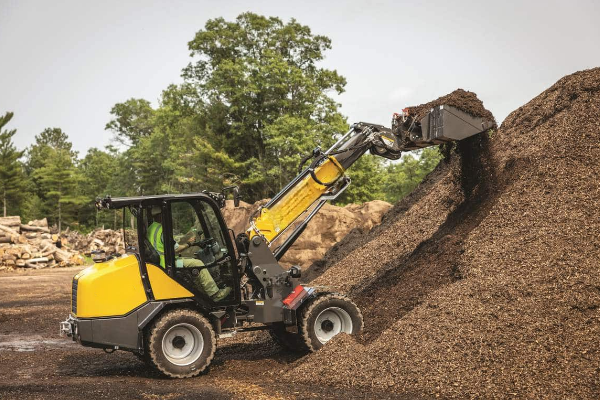
- Light-Material & Side-Dump Buckets: Designed with expanded cubic-yard capacities for coal, wood chips, and grain, as well as side-dump variants that deposit material sideways in narrow utility trenches without requiring the Wheel Loader to turn.
Industrial, Forestry, & Logistics Attachments
Modern material handling extends far beyond loose aggregate loading into heavy unit-load logistics:
- Heavy-Duty Pallet Forks & Pipe Handlers: Transforming your primary Wheel Loader into a high-capacity yard handler capable of moving bundled rebar, precast concrete structures, and large utility pipes on job sites.
- Log Grapples & Scrap Clamps: Featuring heavy-duty hydraulic arms to secure uneven timber, crushed vehicle bodies, and industrial scrap metal during high-speed yard transport.
Specialized & Seasonal Work Tools
Maintaining machine utilization year-round requires adapting to shifting seasonal contracts and specialized municipal tasks:
- Hydraulic Sweepers & Rotary Brooms: Cleaning job-site access roads, paving surfaces, and industrial yards efficiently using integrated auxiliary hydraulics.
- Snow Blowers, Angle Blades, & Cold Planers: Transforming standard Wheel Loader Attachments into high-output snow clearing or asphalt milling machines, keeping fleet assets generating revenue during winter months or specialized road maintenance projects.
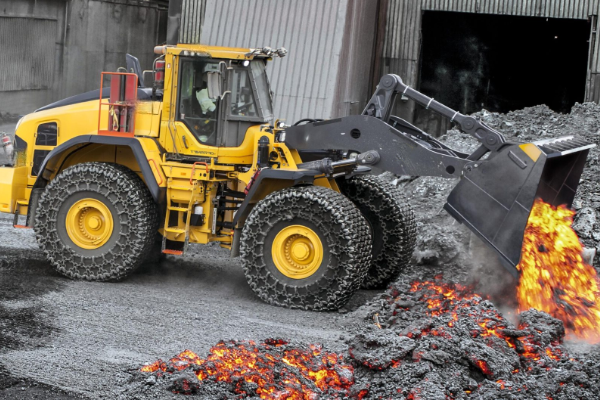
Technical Compatibility Metrics: Hydromechanics and Load Dynamics
Achieving peak performance and preventing premature component failure requires rigorous technical matching between the primary machine and front-end work tools. Indiscriminately mounting oversized or hydraulically mismatched attachments can cause severe hydraulic relief blowing, front-axle structural fatigue, and hazardous machine instability. As mechanical systems scholar Dr. M. G. Rabie, a leading authority on fluid power engineering, noted in his research on hydraulic actuation, "Matching fluid flow rates and system pressure parameters to work tool actuators is essential to prevent thermal fluid degradation and maximize mechanical power conversion." Evaluating key hydromechanical metrics ensures your equipment operates within design parameters.
Sizing to Material Bulk Density
Attachment volumetric selection must directly reflect the bulk density ($lbs/yd^3$ or $kg/m^3$) of the targeted material. Operating a high-capacity bucket in heavy iron ore or wet gravel overloads the machine's front axle and triggers hydraulic safety relief valves, wasting fuel and risking tipping accidents. Conversely, using a small rock bucket to move light wood chips or dry topsoil severely starves cycle efficiency.
Auxiliary Hydraulic System Demands
Powered Wheel Loader Attachments—such as cold planers, snow blowers, and rotary sweepers—rely heavily on the carrier’s hydraulic circuit:
Flow Rates (GPM or L/min): Standard flow circuits suit low-demand functions like grapples and quick couplers. Continuous high-flow auxiliary circuits are required for high-RPM hydraulic motors to maintain torque under continuous load without stalling.
Operating Pressure & Valve Configurations: Verify relief pressure settings (PSI or bar) to avoid blown seals. Third- and fourth-function spool valves are necessary to independently control multi-axis tools like tilt-rotators or folding snow plows from inside the cab.
Quick Coupler Architecture
Choosing the correct interface dictates fleet versatility and attachment exchange speed:
Pin-On Configurations: Offer maximum breakout force and lowest structural weight, making them ideal for dedicated, heavy-duty quarry operations where tool changes are rare.
Hydraulic Quick Couplers: Utilizing standardized ISO or Euro interface geometry, quick couplers allow operators to swap specialized Wheel Loader Attachments in under 30 seconds directly from the cab, dramatically increasing multi-tool operational utilization across dynamic construction sites.
The Financial Business Case: Quantifying Attachment ROI and Payback Cycles
Evaluating front-end work tools requires analyzing long-term lifecycle value creation alongside initial capital expenditure. Acquiring purpose-built attachments directly optimizes site throughput, reduces cycle times, and minimizes labor overhead. As corporate finance pioneer Professor Damodaran observed in his framework on capital asset management, "The true economic value of a supporting capital asset is determined by its ability to increase the productivity and cash-flow efficiency of the core operating unit." Quantifying the financial business case ensures that every attachment purchase yields measurable returns.
Cycle Time Optimization & Reduced Idle Times
Every extra pass required to load a haul truck increases fuel consumption, operator fatigue, and site congestion. Deploying specialized Wheel Loader Attachments—such as high-capacity material buckets or side-dump tools—can reduce loading cycles from four passes down to three per truck. Over an eight-hour shift loading dozens of highway haulers, this cycle optimization eliminates cumulative truck waiting times, optimizes fleet logistics, and significantly increases daily tonnage throughput.
Fuel Efficiency vs. Payload Ratio
Attachment structural weight directly impacts the carrier's fuel economy. Tools engineered from high-strength, lightweight steel alloys (such as Hardox) reduce dead weight without sacrificing structural rigidity. By lowering attachment tare weight, the carrier redirects engine horsepower toward net payload lifting rather than dragging heavy structural steel. This improved weight-to-payload ratio noticeably drops hourly fuel burn per ton moved, compounding significant operational cost savings across thousands of operating hours.
Rent vs. Buy Decision Matrix
Fleet directors must balance asset acquisition methods against annual operational utilization:
Direct Capital Purchase: Optimal for core, high-utilization tools like general-purpose buckets or pallet forks that remain mounted for hundreds of operational hours per year, yielding rapid capital amortization.
Short-Term Rental: Highly cost-effective for specialized or seasonal Wheel Loader tools—such as cold planers, asphalt cutters, or large snow blowers—where low annual operating hours do not justify upfront procurement and long-term storage costs.
Inspection, Preventive Maintenance, and Job-Site Safety Protocols
Maintaining high operational availability and extending component longevity demands rigorous preventive maintenance routines and strict site safety management. Neglecting routine work-tool inspections leads to catastrophic weld failures, severe hydraulic fluid contamination, and costly unplanned machine downtime. As workplace safety expert and industrial ergonomics specialist Dr. Fred A. Manuele observed in his research on hazard control, "Preventive inspection regimes and rigorous pre-operational checks represent the primary line of defense against catastrophic mechanical failures and site accidents." Implementing structured maintenance protocols safeguards both machinery assets and site personnel.
Ground-Engaging Tool (GET) Audits
Ground-engaging components absorb severe continuous wear during excavating and loading operations:
Wear Indicator Audits: Frequently measure bucket tooth wear, adapter integrity, corner shrouds, and bolt-on cutting edges. Operating a bucket beyond its designated wear limits damages the parent metal shell, resulting in expensive structural repairs.
Pin and Bushing Inspections: Check pivot pins and grease bushings for excessive play or ovality. Proper daily greasing purges abrasive grit, prevents pin galling, and maintains precise tool tilt control.
Hydraulic Contamination Prevention
Switching between auxiliary Wheel Loader Attachments exposes sensitive fluid circuits to particulate and chemical contamination:
Quick-Disconnect Hygiene: Thoroughly clean hydraulic quick-coupler faces prior to engaging or disengaging auxiliary lines to prevent dirt, sand, and moisture from entering the main hydraulic system.
Fluid Analysis Protocols: Periodically sample hydraulic oil to check for microscopic metal debris or seal degradation, protecting main pumps and control valves from premature wear.
Load Balance & Stability Standards
Safely operating a Wheel Loader with heavy front-end attachments requires strict adherence to dynamic load stability guidelines:
Tipping-Load Margins: Never exceed 50% of the full-turn tipping load for bucket applications, or 60% of the tipping load when utilizing pallet forks, as defined by ISO stability standards.
Hitch Engagement Verification: Ensure operators execute a mandatory visual check and ground-pressure test after engaging quick couplers to verify that locking pins are fully seated before lifting heavy loads.
Selection Framework: 5 Strategic Steps to the Right Attachment Investment
Selecting the optimal front-end work tool requires a structured evaluation of material mechanics, hydraulic limits, and long-term financial returns. As quality management pioneer Dr. Joseph M. Juran emphasized in his foundational work on capital equipment selection, "Quality and operational excellence are achieved by design through systematic process analysis, eliminating guesswork before capital is committed." Following this step-by-step decision framework empowers equipment managers to make precise, high-ROI investment decisions:
- Step 1: Define Primary Job-Site Material Profiles and Density Ranges: Identify the bulk density (in lbs/yd³ or kg/m³), abrasiveness, and moisture content of the materials being moved. This dictates whether your project requires high-capacity light-material tools, reinforced rock buckets, or heavy unit-handling grapple attachments.
- Step 2: Verify Machine Tipping Load, Rated Operating Capacity, and Counterweight Setup: Calculate the maximum allowable payload using the carrier's full-turn tipping load ratings. Ensure the combined weight of the attachment and material payload remains safely within ISO rated operating capacity bounds to maintain machine stability.
- Step 3: Audit Auxiliary Hydraulic Flow Rates and Operating Pressures: Match the carrier's auxiliary hydraulic output (GPM/L-min and PSI/bar) to the work tool's requirements. Continuous high-demand tools require high-flow hydraulic circuits to operate at peak torque without overheating the system.
- Step 4: Evaluate Coupler Interface Standards for Fleet Interoperability: Determine whether pin-on mounting or hydraulic quick couplers best suit your operation. Standardizing coupler interface dimensions across your carrier fleet enables seamless sharing of high-value Wheel Loader Attachments across multiple job sites.
- Step 5: Perform a 3-Year Life-Cycle Cost (LCC) and Productivity Analysis: Model the total financial impact over a 36-month horizon. Compare initial capital expenditure against projected fuel savings, cycle time reductions, labor efficiency gains, and anticipated resale or trade-in value.
Strategic Summary & Fleet Management Takeaways
Optimizing material handling efficiency and maximizing asset utilization requires viewing work tools as strategic investments rather than simple mechanical accessories. Equipping a primary Wheel Loader with purpose-built Wheel Loader Attachments expands operational versatility across construction, mining, agriculture, and municipal contracts while significantly boosting fleet profitability. By aligning material bulk density, auxiliary hydraulic performance, coupler interoperability, and rigorous preventive maintenance protocols, equipment managers can shorten pass counts, lower hourly fuel consumption, and eliminate unnecessary downtime.
Building a flexible, high-ROI fleet depends on making data-driven procurement choices that prioritize long-term life-cycle value over initial purchase price alone. Contact our heavy machinery specialists today to request a customized compatibility audit and discover how the right attachment ecosystem can transform your job-site productivity.
Frequently Asked Questions (FAQ) About Wheel Loader Attachments
Q1: How do I calculate the correct bucket size for my Wheel Loader?
To determine the correct bucket capacity, divide your Wheel Loader's Rated Operating Capacity (ROC)—typically 50% of the full-turn tipping load—by the bulk density of the target material (in lbs/yd³ or kg/m³). Choosing a bucket volume based on this calculation ensures maximum payload per pass without triggering hydraulic relief valves or destabilizing the machine.
Q2: Can I use high-flow Wheel Loader Attachments on a standard hydraulic flow machine?
Operating continuous high-demand tools (such as cold planers or rotary snow blowers) on a standard-flow hydraulic system will result in severe tool underperformance, stalling, and fluid overheating. High-flow Wheel Loader Attachments require dedicated auxiliary hydraulic circuits capable of delivering both elevated pressure (PSI/bar) and continuous high flow rate (GPM/L-min) to generate necessary torque under heavy load.
Q3: What are the main operational advantages of hydraulic quick couplers over pin-on attachments?
Hydraulic quick couplers allow operators to swap work tools in under 30 seconds directly from inside the cab, dramatically increasing machine utilization across multi-task job sites. While traditional pin-on configurations offer maximum breakout force and lowest structural tare weight for dedicated single-duty operations, quick couplers provide superior fleet adaptability and lower total labor hours per job.
Q4: How do lightweight, high-strength steel attachments improve overall ROI?
Attachments manufactured from advanced high-tensile steels (such as Hardox) reduce the tare weight of the tool itself without sacrificing structural durability. By lowering dead weight on the front axle, the primary loader redirects engine horsepower toward moving net payload rather than structural steel, significantly lowering fuel consumption per ton moved and reducing long-term component wear.
Q5: What daily maintenance checks are critical for protecting auxiliary hydraulic systems during tool swaps?
Prior to engaging or disengaging auxiliary quick-disconnect fittings, operators must thoroughly clean the coupler faces to prevent dirt, sand, and moisture from entering the fluid circuit. Additionally, checking pin-and-bushing grease seals and conducting daily visual inspections for hydraulic line weeping or Ground-Engaging Tool (GET) wear prevents catastrophic pump failure and unexpected job-site downtime.



- The Ultimate Guide to Choosing the Right Wheel Loader Attachments for Maximizing Job-Site ROI
- Diesel vs. Electric Forklifts: How to Select the Ideal Material Handling Solution for Your Industry
- 5 Maintenance Best Practices for Extend the Lifespan of Heavy Machinery: Loaders, Excavators, and Forklifts
Company: Shandong Ruisheng Heavy Industry Co., Ltd.
WhatsApp: +86 187 6302 1167
Email: [email protected]