



Diesel vs. Electric Forklifts: How to Select the Ideal Material Handling Solution for Your Industry
Introduction
In modern supply chain architecture, selecting the right material handling equipment is far more than a routine procurement task—it is a core business decision that directly impacts operational throughput, workforce safety, and long-term financial performance. Choosing between internal combustion and battery-powered machinery influences daily fuel overhead, preventive maintenance cycles, and carbon compliance. As supply chain management expert Dr. Donald Bowersox emphasized in his research on logistical operations, "Operational efficiency in material handling is not merely achieved by moving goods faster, but by deploying equipment designed specifically for the environmental and economic constraints of the facility." Aligning machine specifications with site requirements is essential for maximizing return on investment (ROI).
The industrial Forklift has undergone a significant transformation across global logistics networks, high-density distribution hubs, manufacturing plants, and outdoor construction yards. Historically dominated by diesel engines designed for raw mechanical torque, the material handling industry is undergoing a rapid transition toward electrification, driven by stringent indoor air quality standards, corporate ESG (Environmental, Social, and Governance) targets, and rapid advancements in battery technology. However, diesel power remains indispensable in high-tonnage, open-air environments where continuous power and rugged terrain capabilities are paramount.
The objective of this comprehensive guide is to provide fleet managers, warehouse directors, and procurement specialists with a side-by-side comparative analysis of diesel vs. electric models. By examining performance metrics, total cost of ownership (TCO), environmental regulations, and specific operational use cases, this guide serves as a practical roadmap to help you select the ideal Forklift solution for your facility.
Understanding Diesel Forklifts: Power, Performance, and Applications
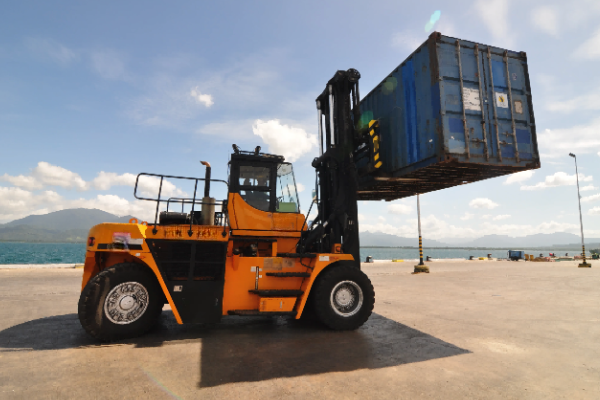
Diesel-powered material handling machinery remains the cornerstone of heavy industrial logistics and outdoor material transport. Built around high-torque internal combustion engines (ICE), these machines are engineered to operate continuously under severe environmental conditions and heavy mechanical loads. As mechanical engineering scholar Prof. John B. Heywood, a leading authority on internal combustion engines, highlighted in his research, "Diesel engines offer an unmatched power density and thermal efficiency profile, making them uniquely capable of delivering sustained, high-load mechanical output over extended operational duty cycles." Understanding these core engineering characteristics explains why diesel models remain dominant in heavy-duty sectors.
Engineering Overview & Key Operational Advantages
Unlike electric counterparts that rely on battery discharge rates, a diesel Forklift maintains 100% of its rated torque output regardless of fuel level, delivering consistent hydraulic lifting speeds and tractive force throughout the work shift:
- Exceptional Outdoor and Rough-Terrain Performance: Designed with high ground clearance, heavy-duty drive axles, and pneumatic tires, diesel units easily navigate gravel yards, unpaved muddy ground, and steep inclines without loss of traction.
- Rapid Refueling for 24/7 Multi-Shift Operations: Refueling a diesel tank takes less than five minutes. This eliminates the battery charging and cooling downtime required by traditional electric systems, making diesel ideal for continuous, multi-shift port and yard operations.
- Superior Towing & High-Tonnage Lifting Capacity: Diesel engines excel in heavy-capacity classifications (frequently exceeding 5 to 25+ metric tons), effortlessly handling heavy steel coils, concrete blocks, and oversized shipping containers.
Primary Industrial Use Cases
Because diesel combustion produces exhaust emissions and noise, these machines are primarily deployed in open-air or well-ventilated industrial settings. Typical applications for a diesel-powered Forklift include:
- Lumber & Timber Processing Yards: Transporting heavy stacks of wet timber and finished lumber across uneven gravel yards.
- Ports, Freight Terminals, & Intermodal Hubs: Offloading heavy cargo containers and palletized freight from truck trailers and train cars.
- Stone Quarries & Construction Materials Depots: Moving precast concrete pipes, brick pallets, and raw stone blocks across harsh outdoor terrain.
Understanding Electric Forklifts: Innovation, Efficiency, and Sustainability
Electric material handling technology has evolved from a light-duty warehouse option into a primary powerhouse for indoor logistics and clean-tech manufacturing. Powered by advanced electric drive motors and energy storage systems, these machines eliminate tailpipe emissions while significantly lowering decibel levels on job sites. As industrial sustainability expert Dr. Allenby noted in his research on green logistics, "Electrification of material handling equipment represents one of the most immediate and cost-effective pathways for industrial facilities to eliminate indoor toxic emissions and achieve carbon reduction targets." Modern battery technology has solidified electric machinery as a reliable, high-efficiency asset.
Battery Power Technologies
The performance profile of an electric Forklift depends heavily on its internal battery chemistry:
- Lead-Acid Batteries: The traditional choice, offering a lower initial purchase price. However, they require 8-hour charging cycles followed by 8-hour cooling periods, dedicated battery room ventilation, and weekly topping off with distilled water.
- Lithium-Ion (Li-Ion) Batteries: The modern industry standard. Li-Ion technology offers fast "opportunity charging" during shift breaks without memory degradation, zero routine maintenance, longer battery service lifespans, and higher energy efficiency, enabling continuous multi-shift operations on a single battery pack.
Key Operational Advantages
- Zero Tailpipe Emissions: Produces zero carbon monoxide, nitrogen oxides, or particulate matter, ensuring 100% compliance with strict indoor air quality regulations and safety standards.
- Ultra-Low Operating Noise: Silent electric motor operation drastically lowers warehouse ambient noise, reducing operator fatigue and allowing clearer communication among ground staff to prevent accidents.
- Lower Maintenance Overheads: With no internal combustion engine, spark plugs, timing belts, fuel injectors, or engine oil filters, electric models have significantly fewer moving parts, resulting in fewer mechanical breakdowns and reduced maintenance costs.
Primary Industrial Use Cases
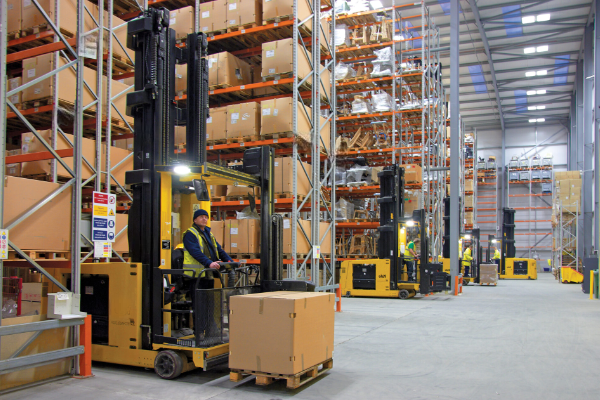
Electric units are the premier choice for indoor and environmentally sensitive facilities where air purity, low noise, and hygiene are mandatory. Common applications for an electric Forklift include:
- Cold Storage & Refrigerated Warehouses: Operating reliably in freezing temperatures without producing exhaust gas condensation or heat buildup.
- Food & Beverage Processing Plants: Transporting food ingredients and packaged goods while maintaining sterile, clean-air environments.
- Pharmaceutical & Chemical Storage: Handling sensitive medical goods where dust, soot, and carbon emissions are strictly prohibited.
- E-Commerce & High-Density Distribution Centers: Navigating narrow aisles and logistics racks quietly and efficiently 24/7.
Head-to-Head Comparison: Total Cost of Ownership (TCO) & Performance Metrics
When evaluating total cost of ownership (TCO) and daily performance metrics, fleet managers must balance upfront capital expenditure against long-term operating costs. A diesel Forklift typically presents a lower initial purchase price, making it an attractive short-term investment; however, its continuous requirement for diesel fuel, frequent engine oil changes, transmission servicing, and filter replacements results in substantially higher ongoing operating expenditures over a 5-to-10-year lifecycle. Conversely, an electric Forklift demands a higher upfront capital investment—primarily due to advanced lithium-ion battery packs and charging infrastructure—but offsets this initial cost with dramatically lower electricity overhead, zero fuel consumption, and minimal routine maintenance due to fewer moving engine parts.
In terms of duty cycles and shift operations, diesel machines deliver unbroken productivity through rapid 5-minute tank refills, making them ideal for heavy-tonnage, continuous outdoor work where charging stations are unavailable. Modern lithium-ion electric units have rapidly closed this operational gap through opportunity charging during operator breaks, allowing multi-shift indoor usability without complex battery swaps. As supply chain financial analyst Michael Porter emphasized in his competitive advantage framework, "Evaluating capital assets requires looking past acquisition cost to analyze total life-cycle value creation." Ultimately, while diesel dominates initial cost efficiency and high-tonnage outdoor power, electric models deliver a far superior total cost of ownership over long-term indoor and high-hour applications.
Environmental Impact, Safety Regulations, and Site Conditions
Operating environments and regulatory standards strongly dictate whether internal combustion or electric machinery is suitable for a facility. Workplace safety guidelines, such as those set by OSHA and international health agencies, strictly regulate indoor air quality regarding carbon monoxide (CO) and diesel particulate matter. Operating a diesel Forklift inside poorly ventilated structures creates severe respiratory hazards, making zero-emission electric models mandatory for enclosed warehouses, food plants, and pharmaceutical facilities. As environmental health and safety expert Dr. Philip Landrigan noted in his research on occupational health, "Eliminating combustion emissions from enclosed work spaces is the primary step in preventing chronic occupational respiratory illness and ensuring worker safety."
Beyond indoor air standards, external site conditions and ambient noise play a crucial role in equipment selection. Outdoor industrial yards with unpaved terrain, heavy rain, or mud favor the heavy chassis, ground clearance, and sealed internal combustion components of diesel units. However, in indoor logistics hubs, the ultra-low decibel output of an electric Forklift significantly reduces operator fatigue and enhances situational awareness, allowing ground staff to hear reversing alarms and pedestrian traffic more clearly. Fleet managers must evaluate thermal exposure, terrain difficulty, and local environmental compliance to select machinery that ensures both regulatory safety and operational uptime.
Decision Matrix: 5 Steps to Choose the Right Forklift for Your Facility
Selecting the optimal material handling power source requires a structured evaluation of your facility's operational demands and financial targets. As operations management pioneer Dr. W. Edwards Deming advocated, "Systematic decision-making based on measurable operational data eliminates waste and ensures long-term process reliability." Following this step-by-step decision matrix empowers fleet managers to make an objective, high-ROI equipment investment:
Step 1: Assess Operating Environment (Indoor, Outdoor, or Hybrid): Determine where the machine will spend most of its working hours. Enclosed facilities, cold storage, and food handling plants require the zero-emission profile of an electric Forklift, whereas open gravel yards, lumber mills, and ports naturally align with diesel power.
Step 2: Calculate Required Lift Capacity and Mast Heights: Define your maximum load weights and vertical rack heights. High-tonnage applications exceeding 5 to 10 tons often point toward heavy-duty diesel engines, while standard pallet loads (1.5 to 3.5 tons) are seamlessly handled by electric drive systems.
Step 3: Evaluate Daily Duty Cycles and Shift Structure: Analyze shift patterns and machine utilization hours. Single-shift operations or facilities with scheduled breaks suit electric models with opportunity charging, whereas round-the-clock 24/7 heavy outdoor shifts with no charging downtime benefit from quick diesel tank refuelings.
Step 4: Analyze Total Lifecycle Costs (5 to 10-Year TCO): Compare initial purchase price and charging infrastructure setup against long-term fuel costs, maintenance schedules, and component replacement expenses over the asset's lifetime.
Step 5: Factor in Corporate Sustainability Mandates & Local ESG Goals: Align procurement with corporate carbon-neutrality targets and regional emissions legislation, where shifting to electric power significantly boosts green fleet certifications.
Conclusion
Selecting between diesel and electric material handling equipment ultimately depends on aligning engine performance and fuel characteristics with your facility's operational demands. While diesel internal combustion engines continue to offer unmatched torque, heavy-duty towing capacity, and instant 5-minute refueling for rugged outdoor yards, electric battery technology has established clear dominance in indoor warehousing, cold storage, and clean-tech manufacturing through zero emissions, reduced noise levels, and substantially lower long-term maintenance costs. Evaluating your specific operating environment, duty cycles, lift capacities, and total cost of ownership (TCO) ensures a decision that balances short-term capital investment with sustained long-term efficiency.
Making the right investment protects your bottom line, maximizes site safety, and keeps your supply chain operating seamlessly. Contact our team of material handling experts today for a customized site assessment to determine whether a high-performance diesel or advanced electric Forklift fleet best serves your business goals.
Frequently Asked Questions (FAQ) About Diesel and Electric Forklifts
Q1: Can an electric Forklift operate outdoors in severe weather conditions like rain or snow?
Yes, modern electric models engineered for outdoor or rough-terrain applications feature IP-rated water-resistant electrical enclosures, sealed traction motors, and weatherized controllers. However, for severe off-road environments with deep mud, gravel, or unpaved terrain, heavy-duty diesel models with high ground clearance and mechanical drive axles remain the traditional preference.
Q2: What is the average battery lifespan of an electric Forklift?
A traditional lead-acid battery typically lasts between 1,500 to 2,000 charge cycles (approximately 5 years of single-shift use) with proper watering and maintenance. Modern lithium-ion (Li-Ion) batteries offer a significantly longer lifespan of 3,000 to 5,000+ charge cycles (up to 8 to 10+ years), require zero routine watering, and maintain constant voltage throughout the shift.
Q3: Why are diesel forklifts prohibited in most indoor facilities?
Diesel internal combustion engines emit exhaust gases containing carbon monoxide (CO), nitrogen oxides (NOx), and particulate soot. In enclosed or poorly ventilated spaces, these toxic emissions rapidly accumulate, causing severe respiratory health hazards for operators, violating OSHA indoor air quality standards, and potentially contaminating goods in food, beverage, and pharmaceutical facilities.
Q4: How do the long-term maintenance costs compare between diesel and electric material handling equipment?
Electric models generally cost 30% to 50% less to maintain over their operational lifespan compared to diesel units. Electric drive systems eliminate typical engine components such as spark plugs, fuel injectors, drive belts, turbochargers, transmission fluids, and engine oil filters, resulting in far fewer moving parts subject to mechanical wear and service breakdowns.
Q5: How long does it take to recharge or refuel each type of machine?
Refueling a diesel tank takes approximately 3 to 5 minutes, allowing the machine to immediately resume full-duty work. Charging a traditional lead-acid electric model takes about 8 hours plus an additional 8 hours of cooling time, whereas modern lithium-ion systems support fast "opportunity charging" during operator 15-to-30-minute breaks, eliminating battery swapping entirely during multi-shift operations.



- The Ultimate Guide to Choosing the Right Wheel Loader Attachments for Maximizing Job-Site ROI
- Diesel vs. Electric Forklifts: How to Select the Ideal Material Handling Solution for Your Industry
- 5 Maintenance Best Practices for Extend the Lifespan of Heavy Machinery: Loaders, Excavators, and Forklifts
Company: Shandong Ruisheng Heavy Industry Co., Ltd.
WhatsApp: +86 187 6302 1167
Email: [email protected]